A three-level architecture
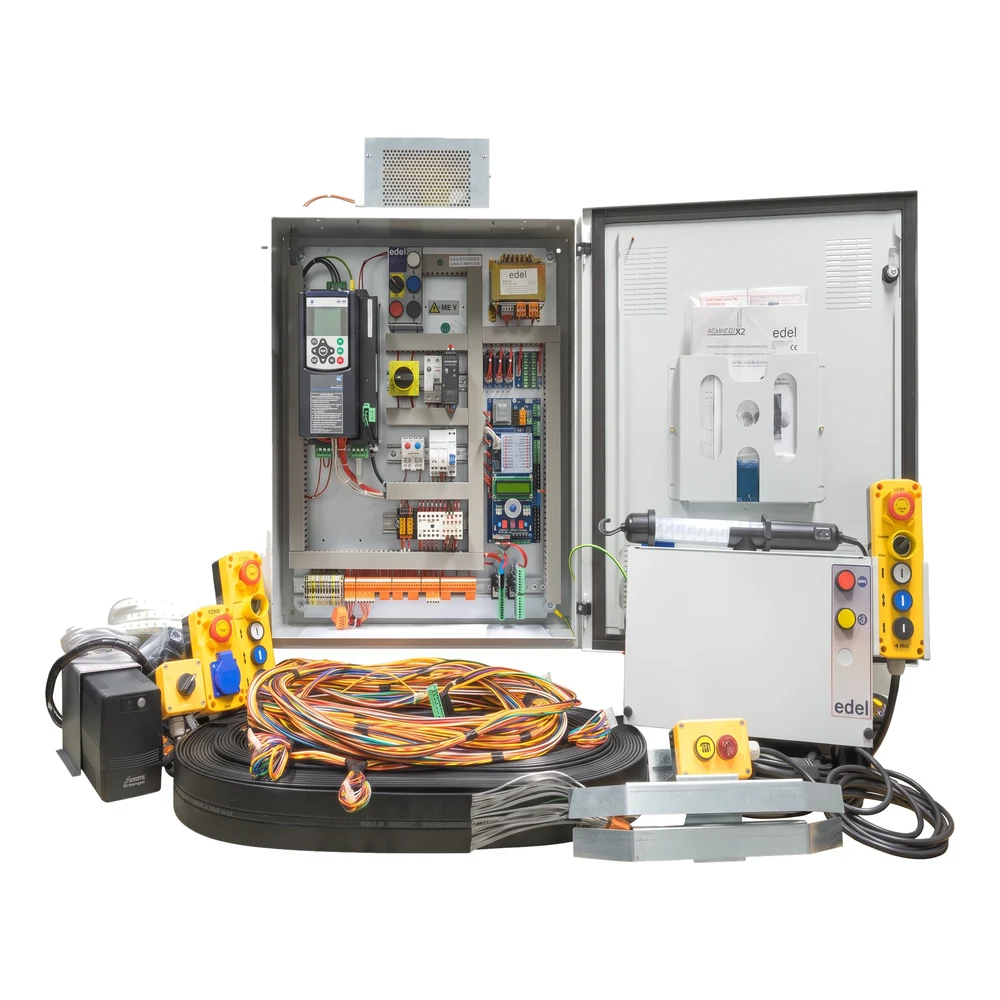
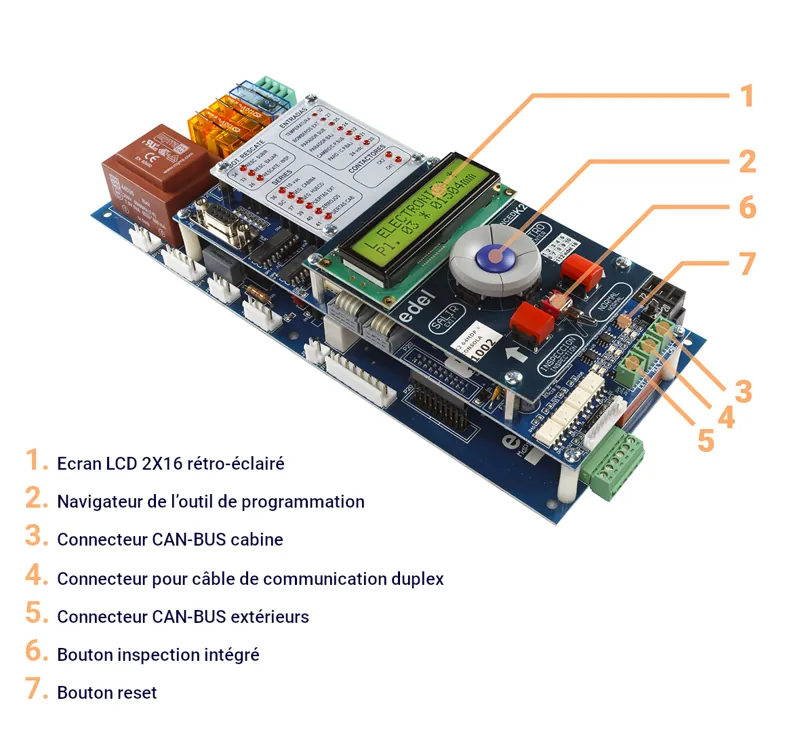
The K2 installation manuals always describe the same split, whatever the lift technology: a main board, an input/output board and a car board.
The main board (64278) holds the intelligence of the controller: call logic, floor management and communication with the programming console. It is the one that decides.
The input/output board is the interface with the power circuits and the safety devices. Door contacts, shaft sensors and contactor commands all arrive there. It is the one that acts, and also the one that suffers most, because it is on the front line against voltage surges.
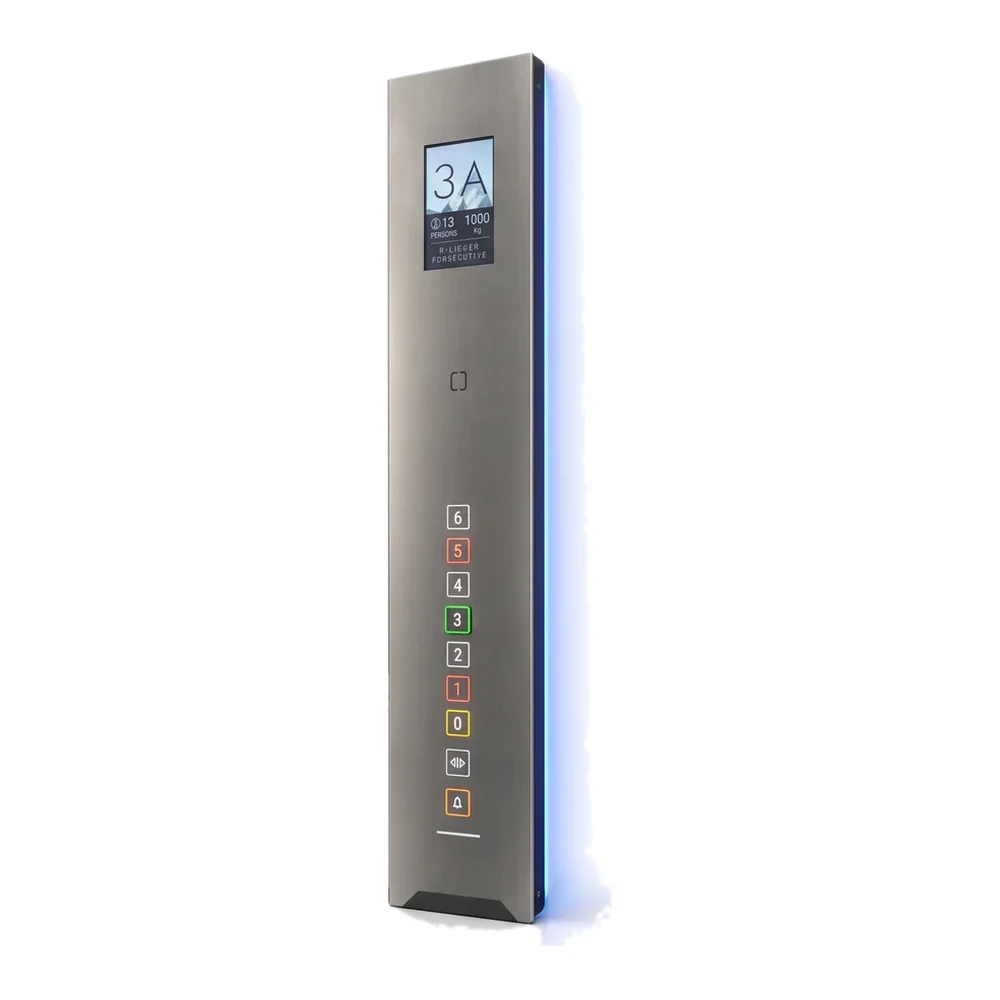
The car board (64290) brings together everything that happens in the car: push buttons, lighting, alarm and door photocells.
64276 or 643VF: the I/O board depends on the technology
This is the most important distinction, and the one most often got wrong when ordering. The input/output board is not the same when the lift is driven by contactors or by a drive.
- 64276: two-speed electric controllers and hydraulic controllers. Available in a simple version and a version with built-in relays.
- 643VF: variable-frequency controllers. It communicates with the drive, which the 64276 cannot do. It comes in versions for a 48 V or 110 V safety circuit, and that value must be respected.
A 64276 board fitted on an installation with a drive will not work, and vice versa. Checking this before ordering saves a return shipment.
Push-button boards are chosen by number of stops
The boards that drive the push buttons and their lighting come in ranges: 2-3 stops, 4-5 stops, 6-7 stops and 8-9 stops.
Count the stops served, not the floors of the building: a ground floor, a mezzanine and three upper floors make five stops, so a 4-5 board.
Signalling boards
Direction arrows and the gong have their own board, from the 64350 family, in a master version and by lighting colour, red or blue. The landing gong belongs to the same family.
These boards are replaced independently of the rest of the controller: an arrow that does not light up does not mean touching the main board.
Before replacing a board
A board that does not respond is not always the culprit. Power supply, a fuse, a badly seated connector or an open safety device produce the same symptoms. The diagnosis belongs to the technician, and reading the lights on the input/output board is the starting point.